Trending thermal products in the 2026 market analysis include EC motor fans and blowers, custom heatsinks, and CFD-validated cooling assemblies, as OEMs shift thermal management from a late-stage part choice to an early specification decision. Persistence Market Research projects the US thermal management technologies market at $5.8 billion in 2026, while Business Research Insights puts the global market at $12.25 billion, rising to $22.02 billion by 2035.
Thermal management in 2026 is being written into the spec sheet earlier, with less room for guesswork and far less tolerance for re-spins. OEMs and contract manufacturers are facing tighter thermal margins across automotive, EV charging, medical, industrial, lighting, and telecom programs, while buyers are asking for design support before prototype builds start.
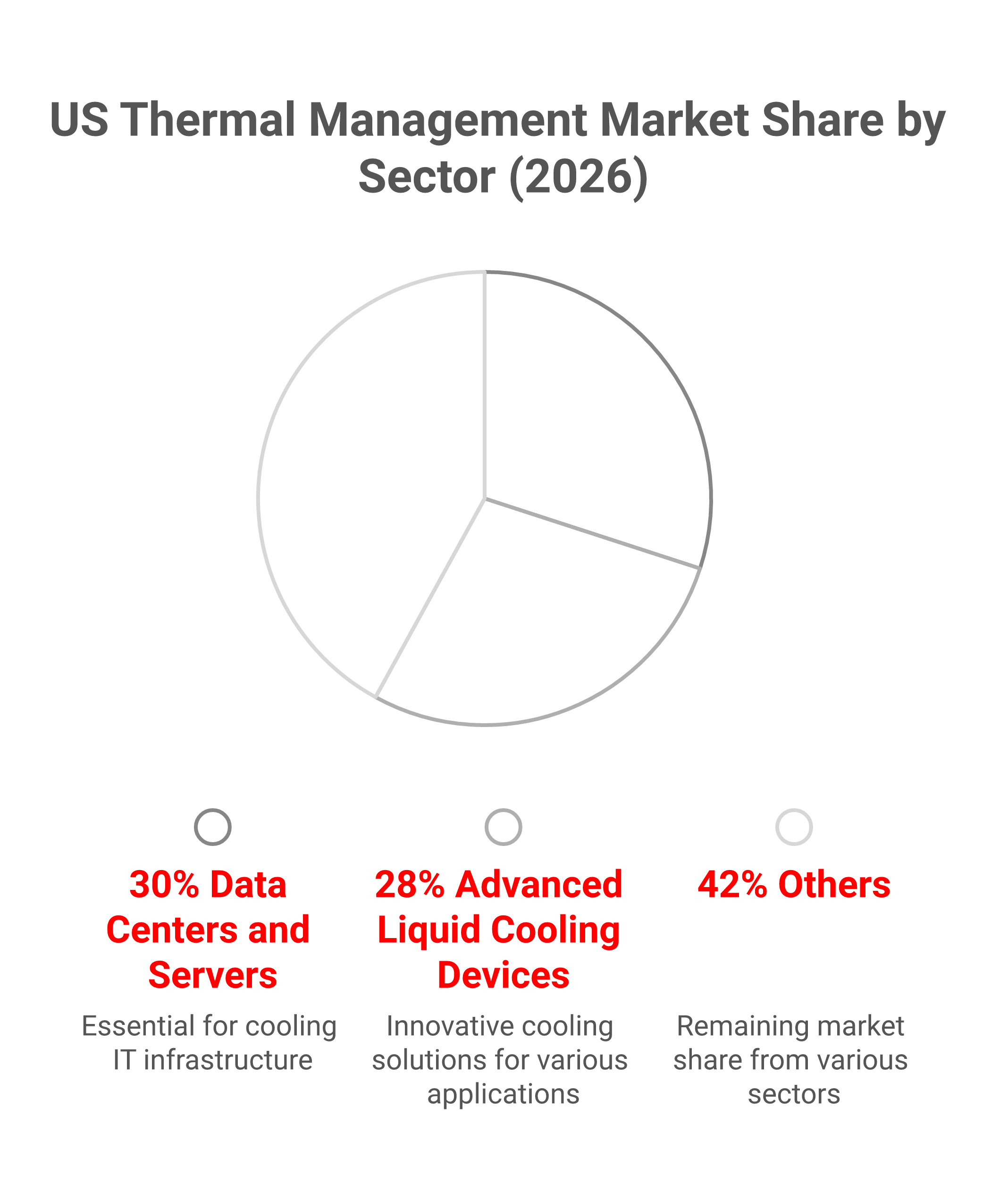
That shift changes the buying conversation. A fan, blower, or heatsink is no longer selected as a late-stage part number. It has to fit the enclosure, the acoustics target, the IP requirement, the compliance path, and the production plan from the start. In the US thermal management technologies market, Persistence Market Research projects US$5.8 billion in 2026, with data centers and servers holding 30% share and advanced and liquid cooling devices at 28%. That kind of pressure is pushing engineering teams to ask better questions earlier.
The same pattern shows up across global forecasts. Business Research Insights projects the thermal management market at USD 12.25 billion in 2026, rising to USD 22.02 billion by 2035. Fortune Business Insights places the broader thermal management system market at USD 88.18 billion in 2026, with Asia Pacific holding 49.40% of the market in 2025. Those numbers point to a market that rewards suppliers who can support both volume and application-specific design, not just ship catalog parts.
Table of Contents
- Why 2026 changes the thermal management brief
- Global scale matters, but local support decides project velocity
- The 2026 shift toward custom thermal solutions over catalogue-only parts
- What engineers will demand more of in 2026
- How YS Tech USA supports faster NPI from concept to production
- Key Takeaways
- FAQ
- About YS Tech USA
- A better way to start the next program
Why 2026 Changes The Thermal Management Brief
2026 Is forcing thermal management to move from a component choice to a system decision. Rising power density, tightening packaging, and more regulation mean the cooling answer has to be correct at specification stage, not after the first test build misses its temperature target.
The automotive market shows how fast the bar is rising. Coherent Market Insights projects automotive thermal management at USD 109.02 billion in 2026, climbing to USD 166.11 billion by 2033, with battery thermal management expected to hold the largest share in 2026. Passenger cars are expected to account for 60.2% of the market, which tells you how much volume pressure sits behind every cooling decision.
Design Speed Is Now A Thermal Requirement
Design speed matters because the wrong cooling choice costs weeks, not just dollars. Research and Markets says the EV thermal management system market will grow from $3.52 billion in 2025 to $4.04 billion in 2026, then to $7.07 billion by 2030, at a 15% CAGR from 2026 to 2030. That growth is tied to fast charging, higher energy density batteries, extreme climate demand, and stricter efficiency rules.
I have seen teams lose months because a low-cost fan met airflow on paper but missed acoustic targets, connector constraints, or voltage protection needs. When that happens, the thermal problem stops being technical and becomes a schedule problem. You get a second sourcing review, another validation loop, and another design meeting nobody planned for.
Specification Stage Decisions Reduce Re-Spins
The best 2026 teams are solving thermal management where the enclosure, the PCB, and the compliance plan are still fluid. That is where CFD analysis, heatsink geometry choices, and fan and blower selection do real work.
Fortune Business Insights says higher power densities are pushing adoption of liquid cooling, heat pipes, and phase change materials. BCC Research, reported via GlobeNewswire, projects the global market for thermal management technologies to reach $30 billion by 2030 from $19.8 billion in 2025. That kind of growth does not come from one-size-fits-all parts. It comes from programs where the thermal design is tied to the application from the first review.
Global Scale Matters, But Local Support Decides Project Velocity
Global production capacity keeps a program alive. Local engineering support decides whether it moves on time.
That distinction matters because supply continuity and design iteration are not the same thing. A supplier can have worldwide manufacturing and still slow a project down if the engineering team cannot answer application questions quickly, interpret validation data, or recommend a circuit change before the next build.
Volume Flexibility Without Design Delay
Global scale is useful when demand changes late. A program may start as a regional build and turn into a multi-site launch after a customer secures a new platform or a second assembly location. Manufacturing flexibility helps absorb those shifts without forcing a redesign of the cooling strategy.
Business Research Insights puts the United States thermal management market at USD 3.57 billion in 2025, Europe at USD 2.93 billion, and China at USD 3.46 billion. That distribution shows a market spread across several regions, not one centralized supply base. A supplier with worldwide production and US-based engineering can support that spread without making the customer choose between speed and reach.
Local Support Shortens Iteration Cycles
Local support cuts waiting time. It gives thermal engineers and mechanical engineers a way to review performance curves, check bearing options, discuss PWM control, and validate form, fit, and function without dragging the process through long handoffs.
Persistence Market Research reports that the U.S. Data center ecosystem has about 43.4 GW of operational capacity, with vacancy near 4.2%. Tight infrastructure like that turns cooling into a commercial variable, not just a technical one. When capacity is tight, the thermal design has to be right the first time because there is little room for inefficiency or extra heat load.
The 2026 Shift Toward Custom Thermal Solutions Over Catalogue-Only Parts
Catalogue-only sourcing breaks down when the enclosure is tight, the acoustic target is strict, or the IP rating has to survive real weather, washdown, or dust. Engineers are moving toward custom thermal solutions because the cost of forcing a standard part into the wrong job is higher than it used to be.
The market is rewarding suppliers who can modify a base design, adjust a connector, change a wire exit, tune PWM behavior, or shift a heatsink geometry without forcing a full tooling reset. That is where first-pass fit improves and the schedule stops slipping.
Form, Fit, And Function Now Carry More Weight
Standard fans and heatsinks can miss the mark when static pressure, footprint, and sound pressure are all fixed targets. In medical, telecom, and lighting, the noise limit can be as important as airflow. In industrial and outdoor equipment, IP43, IP55, IP56, and IP68 requirements change the entire cooling architecture.
Global Market Insights says the automotive thermal system market was estimated at USD 145.15 billion in 2025 and is expected to reach USD 157.23 billion in 2026, then USD 234.9 billion by 2035. The same report says the market moved through 216 million units in 2025 and is projected to reach 226 million units in 2026. That is a large installed base, but it is also a fragmented one. The cooling solution has to match the exact platform, not just the segment.
CFD Analysis Cuts Re-Spin Risk
CFD analysis is not a luxury step for teams with extra time. It is the fastest way to expose airflow impedance, recirculation, dead zones, and pressure losses before a prototype locks in the wrong geometry.
In 2026, the value of CFD is not theory. It is fewer board re-spins, fewer bracket changes, and fewer thermal surprises after the first integration build. When CFD is paired with engineering review and a custom part path, the team can move from concept to validated configuration with less waste.
What Engineers Will Demand More Of In 2026
Engineers will keep asking for lower noise, higher reliability, and better controllability. The difference is that those requests are becoming baseline requirements instead of premium options.
Products are getting smaller, hotter, and more regulated at the same time. That pushes thermal management toward EC motors, smarter PWM control, stronger ingress protection, and clearer validation data.
Low Noise Cooling Is Now A Design Constraint
Low noise cooling matters most where the product sits near people or lives in a sound-sensitive environment. Medical devices, telecom racks, office equipment, commercial lighting, and studio gear all punish a cooling design that sounds fine on a bench and objectionable in the room.
YS Tech USA's medical and telecom application experience maps directly to that pressure. Low current consumption, PWM integration, and acoustic balance are not nice-to-have features when the customer can hear the product every day. In that setting, airflow alone is not enough.
High Reliability Cooling Is Replacing Generic Durability Claims
High reliability cooling means validation data, known bearing behavior, moisture resistance, over voltage protection, and a design that survives the real environment. In automotive and industrial platforms, the cooling assembly may face heat, vibration, contamination, and long duty cycles at the same time.
Coherent Market Insights says North America is projected to lead the automotive thermal management market in 2026 with a 39.9% share. That regional demand supports a design culture that values compliance, durability, and traceable testing. For teams building to AEC-Q or similar requirements, the thermal path has to be more than a commodity fan selection.
EC Motors And Static Pressure Curves Matter More
EC motors keep gaining attention because controllability and efficiency now matter at the system level. A fan that moves air is no longer enough if it cannot hold a usable curve across a real enclosure with filters, fins, ducts, and connectors in the path.
That is why static pressure curves, PWM compatibility, and system-level airflow behavior matter in 2026. If the fan is not selected against the actual impedance curve, the customer finds the error after integration. Then the thermal budget shrinks, the noise rises, and the schedule slips.
How YS Tech USA Supports Faster NPI From Concept To Production
YS Tech USA combines AC, DC, and EC fans, centrifugal blowers with EC motor technology, and high-performance heatsinks into one thermal path for NPI teams. That matters because the buyer does not need three disconnected suppliers to solve one cooling problem.
The real advantage is the mix of US-based engineering and worldwide production. It gives teams local design support and validation input while keeping supply options open when volume, region, or customer demand changes.
A Complete Thermal Toolkit For Real Programs
Fans, blowers, EC motors, and heatsinks belong together when the program is still moving. A thermal engineer may start with an axial fan, then shift to a centrifugal blower when the pressure drop changes, or move to a heatsink revision when the board density rises.
That is why a complete portfolio matters. It lets the team compare cooling paths without changing vendors every time the spec moves. It also reduces handoff friction between thermal engineering, mechanical engineering, and purchasing.
Engineering Partnership Changes The Quality Of The First Build
We work with thermal engineers, mechanical engineers, and NPI buyers who need design accuracy before schedule pressure hardens the spec. CFD, FEA, thermal simulation, and custom product development help remove guesswork from the earliest design reviews.
The outcome is practical. Better first-pass fit. Fewer tool changes. Less time spent proving that a late-stage catalogue part does not fit the actual enclosure. More time spent shipping a product that runs cooler, quieter, and longer.
Key Takeaways
- Solve thermal management at specification stage, not after prototype issues appear.
- Use CFD analysis and application-specific selection to reduce re-spins and fit problems.
- Treat global scale and local support as one requirement, because both affect schedule risk.
- Prioritize low noise cooling, high reliability cooling, and EC motor control where the application demands it.
- Choose custom thermal solutions when enclosure limits, IP ratings, or acoustic targets make catalogue parts a poor fit.
FAQ
Q: Why is thermal management changing so quickly in 2026?
A: Power density keeps rising across automotive, EV charging, medical, industrial, lighting, and telecom platforms. At the same time, buyers are moving earlier in the NPI cycle and asking for design input before prototypes begin. That shifts thermal management from a late procurement item to a core engineering decision. It also raises the cost of picking the wrong fan, blower, or heatsink path.
Q: When should an OEM move from catalogue parts to custom thermal solutions?
A: The move should happen when enclosure limits, static pressure, IP ratings, acoustics, or compliance requirements stop matching standard parts. If the cooling assembly needs a connector change, a special wire exit, or a modified fan profile, a custom path often saves time later. It also improves form, fit, and function in the final assembly. Waiting too long usually creates a redesign instead of a solution.
Q: How does CFD analysis help with fan and blower selection?
A: CFD analysis shows how air actually moves through the real enclosure, not just the idealized test setup. That makes it easier to spot dead zones, recirculation, and pressure losses before hardware is frozen. It also helps compare axial fans, centrifugal blowers, and heatsink options on the same basis. For NPI teams, that usually means fewer surprises after the first build.
Q: Why does local engineering support matter if production is global?
A: Global production gives volume flexibility and supply continuity, but local support shortens the design loop. Engineers can get application guidance, validation input, and quick responses without waiting through long time zone gaps. That reduces schedule risk during specification and validation. It also improves confidence when a program has to move fast.
Q: What do engineers care about most in low noise cooling?
A: They care about airflow, sound pressure, and the shape of the curve across the real operating range. A quiet fan that cannot hold performance in a restricted enclosure is not a good trade. The better result is a design that balances acoustic output with static pressure and duty cycle. That balance is especially important in medical, telecom, lighting, and office-facing industrial products.
About YS Tech USA
YS Tech USA is a premier designer and manufacturer of thermal solutions, specializing in low noise, high-performance DC axial fans, blowers, and heat sink technologies. Located in Huntington Beach, California, we deliver reliable, high-quality products for demanding applications across various industries.
At YS Tech USA, we offer the best of both worlds: the capabilities of a large company with the personalized service of a small one. We collaborate closely with our customers to understand their specific thermal needs and provide customized solutions tailored to their unique requirements.
Our extensive product range includes both modified standard and custom solutions, designed to tackle a wide array of thermal challenges. Whether you need a high-performance fan for a new project or a custom heat sink for an existing application, our team is ready to assist.
With over three decades of industry experience, YS Tech USA has a proven track record of delivering innovative and effective thermal solutions. Contact us today to discover how we can help you address your thermal control challenges.
Start The Thermal Review Before The Schedule Hardens
If your next program has tight acoustics, limited space, or a compliance path that cannot absorb a late redesign, bring thermal management into the first design review. The earlier the cooling architecture is set, the less likely your team is to pay for it later in time, cost, or reliability.
Author
Charlie Taylor is a seasoned industry executive with a demonstrated history of working in the electronics manufacturing industry supporting engineers and buyers with ideas and technical support for fans, blowers and heat sinks.
Read On